From Lab to Market: A Practical Guide for Student Inventors
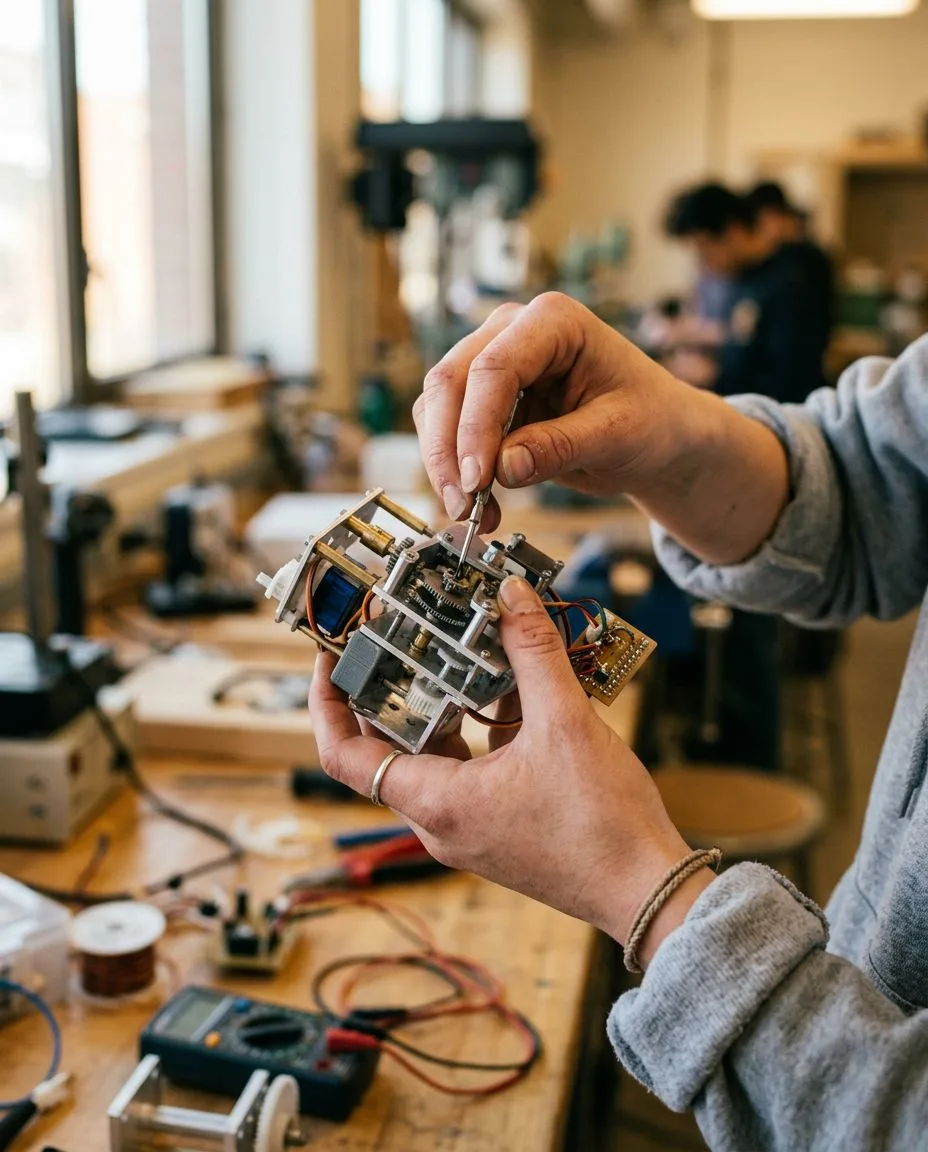
Most student inventors reach the same crossroads: a working prototype sits on the bench, advisors are enthusiastic, and the question becomes what to do next. The jump from academic research to a functioning venture is not accidental. It follows a sequence of deliberate steps, and understanding that sequence early saves months of wasted effort.
This guide draws on the framework that programs like Invention to Venture developed to support students at exactly that crossroads, moving a promising idea out of the university lab and into the hands of people who need it.
Understand What You Actually Have
Before pitching anyone, take time to describe the invention in plain language. If you cannot explain what problem it solves and for whom in two sentences, you are not ready to commercialize it. Clarity of problem and solution is the starting point for every decision that follows.
Ask three questions:
- Who has this problem right now, and how are they currently solving it?
- Why is your solution meaningfully better: faster, cheaper, safer, or more reliable?
- Is there a large enough group of people with this problem to support a sustainable business?
Answering these questions does not require a formal market study. Start by talking to ten potential users. Their language and objections will shape how you frame every subsequent document, from patent claims to investor decks.
Protect the Core Before You Share It
Intellectual property protection is not bureaucratic overhead. It is the asset that gives a technology-based venture its defensible position. Universities typically own inventions made with institutional resources, so the first conversation should be with your technology transfer office.
Work with your institution’s licensing staff to understand whether a patent, trade secret, or copyright best fits your invention. For most hardware and biomedical innovations, a provisional patent application is a practical first step. It establishes a priority date and gives you twelve months to develop the commercial case before committing to full prosecution costs.
Even before filing, document everything: lab notebooks with dated entries, email trails, and version logs. This documentation becomes critical if priority disputes ever arise.
Validate Before You Build
A common and expensive mistake is spending months refining a product before confirming that anyone will pay for it. Market validation does not mean a formal survey. It means finding five to ten potential buyers or partners willing to describe their problem in detail and, ideally, willing to give you a letter of intent, a pilot agreement, or a small purchase order.
For medical devices or regulated products, validation also means understanding the regulatory pathway. A product that requires a 510(k) clearance has different development timelines and capital requirements than software sold directly to consumers. Knowing this early shapes your funding strategy and your team-building priorities.
Build the Right Team
Solo inventors rarely build successful ventures. The combination of technical depth and business execution that a commercialization effort requires almost always spans more than one person’s skills.
Look honestly at what your team currently covers and what it is missing. A biomedical engineer with a strong device prototype may need a regulatory expert, a clinician champion, and someone experienced in sales or business development. University programs, incubators, and competitions are practical places to find co-founders and advisors with complementary skills.
Mentors who have commercialized technology before are particularly valuable. They have navigated the specific bottlenecks (licensing negotiations, early customer conversations, Series A term sheets) that no coursework fully prepares you for.
Pursue Early-Stage Funding Strategically
Student inventors have access to funding sources that disappear once they graduate. E-Team grants, for example, were designed specifically to support student-led technology ventures at the proof-of-concept and prototype stages. National Science Foundation I-Corps funding operates on a similar principle: short, intensive validation programs paired with modest financial support.
These programs serve two purposes. They provide capital, but more importantly, they force structured thinking. An I-Corps cohort requires dozens of customer discovery interviews in a matter of weeks. That discipline accelerates learning faster than months of independent research.
As you move beyond student grants, understand the difference between grants, equity investment, and revenue-based models. Each has different implications for ownership, control, and speed. A grant requires reporting but preserves equity. An angel investment accelerates growth but requires you to share upside and accept oversight.
Use Institutional Resources While You Have Access
University resources (wet labs, prototyping equipment, faculty advisors, and peer networks) are available to you at dramatically lower cost than they would be post-graduation. Use them deliberately. Run experiments that derisk the technical core. Use the machine shop or fabrication lab to build and iterate on prototypes. Attend workshops and regional programs focused on commercialization.
Regional programs like Invention to Venture workshops brought student inventors together with mentors, investors, and peers working on similar challenges. The value was not only the curriculum but the network formed in those sessions. Many early partnerships and co-founder relationships emerged from that kind of structured proximity.
Plan the Transition
At some point, the venture requires full-time attention. Plan that transition rather than letting it happen by default. Know when you need to leave your academic program, whether a leave of absence serves you better than withdrawal, and how your university’s conflict-of-interest policies affect your ability to license technology from your own research.
The path from lab to market is not linear, but it is navigable. The inventors who move successfully are not necessarily the ones with the best technology. They are the ones who treat commercialization as a discipline, seek structured feedback early, and build the team and resources their venture actually needs.
Related Reading: How to Secure Seed Funding for Your Tech Startup | The Importance of Mentorship in Early-Stage Ventures